
Bladder leakage can be embarrassing, frustrating and surprisingly disruptive.
You might notice a small leak when you cough, laugh, sneeze, lift something heavy, run or jump. You may begin wearing liners every day, avoiding certain exercises or checking where the nearest bathroom is before going out.
Although urinary incontinence is common, it should not automatically be accepted as an unavoidable part of childbirth or ageing.
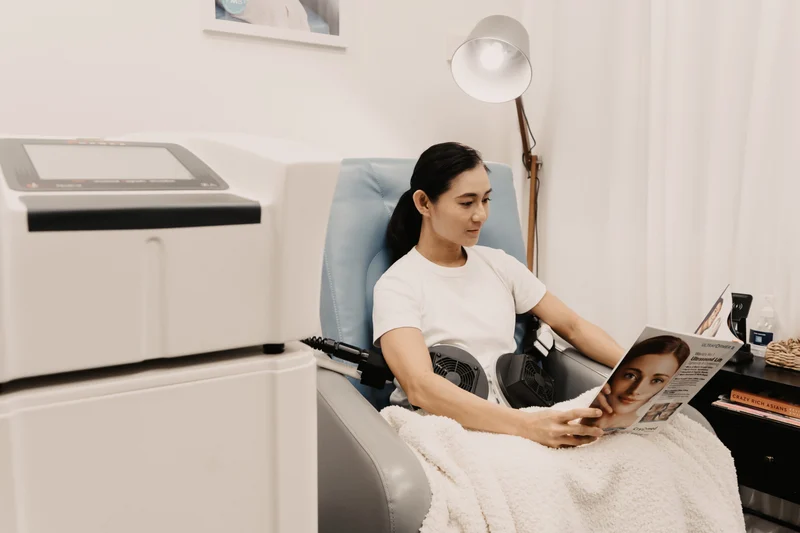
At InnoShape Norwest, we provide Functional Magnetic Stimulation, or FMS Therapy, using TESLAChair™ technology to support suitable clients experiencing pelvic floor weakness and changes in bladder control.
What is urinary incontinence?
Urinary incontinence means experiencing an involuntary loss of urine.
Common patterns include:
Stress urinary incontinence:
Leakage caused by increased pressure during coughing, sneezing, laughing, lifting, running or jumping.
Urgency urinary incontinence:
A sudden, difficult-to-control urge to urinate that may be followed by leakage.
Mixed urinary incontinence:
A combination of stress and urgency symptoms.
Because different forms of incontinence can have different contributing factors, an assessment is important before choosing a therapy.
What Is FMS Pelvic Floor Therapy?
FMS stands for Functional Magnetic Stimulation.
The therapy uses a changing magnetic field to stimulate the nerves connected to targeted muscles. When used for pelvic floor support, this stimulation produces repeated contractions of the pelvic floor muscles.
The client does not need to consciously produce every contraction. This may be useful for someone who struggles to identify, activate or consistently exercise these muscles.
Clinical research describes FMS as a non-invasive conservative approach based on magnetic induction, producing nerve stimulation and pelvic-floor muscle contractions.
What is TESLAChair™?
TESLAChair™ is the chair-based technology used at InnoShape to deliver FMS Therapy.
During an appointment, you remain seated and fully clothed while the equipment delivers magnetic stimulation to the pelvic floor region. The intensity is adjusted according to your comfort and prescribed program.
You may feel the muscles contracting and relaxing throughout the session. The sensation can feel unusual at first, but you remain in control and can communicate with the InnoShape team during the appointment.
The simplest way to understand the relationship is:
TESLAChair™ is the technology. FMS is the therapy. Pelvic floor and bladder support are the goals.
How could pelvic floor strength affect bladder leakage?
The pelvic floor is a group of muscles and supporting tissues located at the base of the pelvis.
These muscles contribute to:
- Bladder and bowel control
- Support for the pelvic organs
- Core stability
- Sexual function
- Control during coughing, lifting and movement
When the pelvic floor muscles are weak, poorly coordinated or difficult to activate, they may not respond effectively when pressure increases inside the abdomen. This can contribute to leakage during activities such as coughing, laughing or exercise.
Who might consider FMS Therapy?
Following an appropriate suitability assessment, FMS Therapy may be considered by people experiencing:
- Leakage when coughing, sneezing or laughing
- Leakage while running, jumping or exercising
- Reduced pelvic floor strength after pregnancy or childbirth
- Changes in bladder control associated with ageing
- Difficulty performing pelvic floor contractions correctly
- Pelvic weakness after certain medical procedures, with appropriate professional clearance
FMS is not automatically suitable for every type or cause of incontinence. Some symptoms require assessment by a GP, pelvic health physiotherapist, continence nurse, urologist or other appropriate healthcare professional.
Is FMS Therapy supported by research?
Research into extracorporeal and functional magnetic stimulation has reported improvements in urinary symptoms and quality-of-life measures for some study participants.
A randomised trial has compared functional magnetic stimulation with pelvic floor muscle training in women with stress urinary incontinence, while other research has evaluated magnetic stimulation for stress, urgency and mixed urinary symptoms.
However, the evidence is not a promise that every person will achieve the same outcome. Studies use different equipment, treatment schedules, participant groups and measurements. Reviews therefore describe the results as promising while also calling for larger and stronger trials.
At InnoShape, this means we avoid promising a cure. We focus on suitability, realistic expectations and monitoring each client’s individual response.
Does FMS replace pelvic floor exercises?
Not necessarily.
Pelvic floor muscle training is commonly used as a conservative first step for stress urinary incontinence. FMS may be considered as another non-invasive option or as part of a broader pelvic-health plan, particularly when someone has difficulty activating the muscles independently.
The most appropriate approach depends on the person, their symptoms and the underlying contributing factors.
What happens at an InnoShape consultation?
Your consultation is an opportunity to discuss:
- The type of leakage you are experiencing
- When the symptoms occur
- How the symptoms affect everyday life
- Your health history and suitability
- What FMS Therapy involves
- Realistic goals and expectations
- Whether another healthcare professional should be involved
The consultation is confidential and does not commit you to starting a program.
Frequently asked questions
Do I need to undress?
No. FMS Therapy using TESLAChair™ is delivered while you remain seated and fully clothed.
Is there an internal examination?
InnoShape’s chair-based FMS session does not require an internal applicator. Your wider healthcare provider may separately recommend an examination when clinically appropriate.
Will one session stop bladder leakage?
No outcome can be guaranteed from one session—or from a complete program. Treatment recommendations and responses vary between individuals.
Is FMS suitable for both women and men?
FMS may be considered for suitable women and men. The reason for the symptoms, medical history and any previous procedures must be considered before treatment.
How many sessions will I need?
There is no universal number appropriate for everyone. Your recommended plan should be based on your symptoms, suitability and response.
When should I seek medical advice?
Speak with an appropriate healthcare professional when leakage is new, unexplained, worsening or accompanied by pain, blood in the urine, recurrent infections, difficulty passing urine or other concerning symptoms.
Regain confidence in everyday movement
Bladder leakage can gradually influence how you exercise, socialise, travel and play with your children or grandchildren.
FMS Therapy offers a discreet, non-invasive way for suitable clients to work on pelvic floor activation without an internal device or strenuous exercise.
At InnoShape, we use FMS TESLAChair™ technology as part of a personalised FMS Therapy service focused on strength, support and everyday confidence.
Book a confidential FMS Therapy consultation
Visit InnoShape in Norwest to try out FMS Therapy works and determine whether may be suitable for your circumstances.